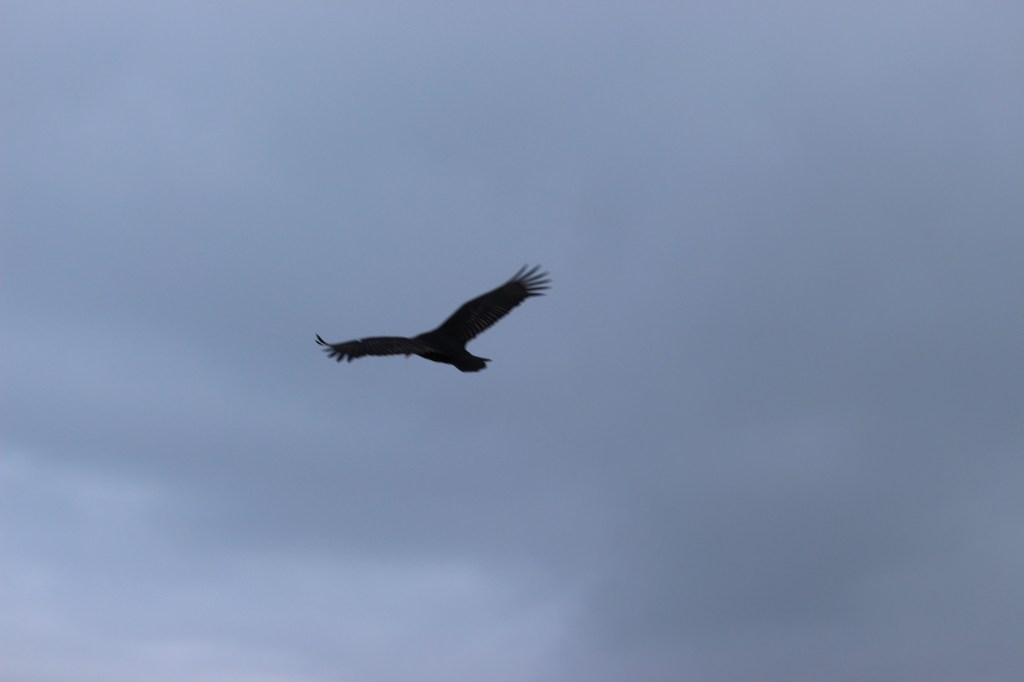
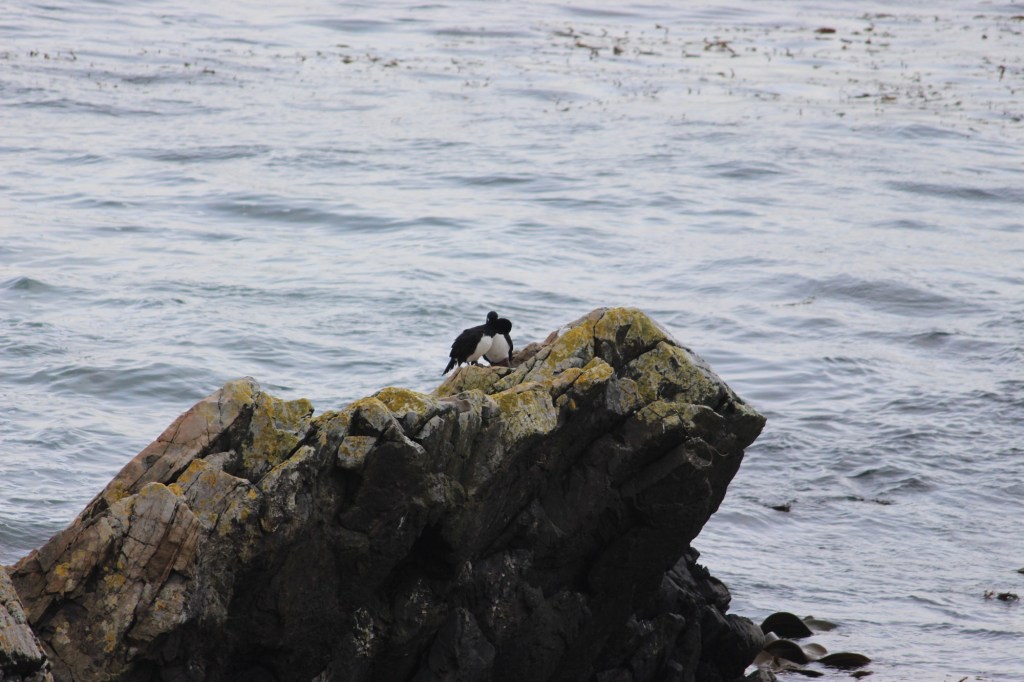
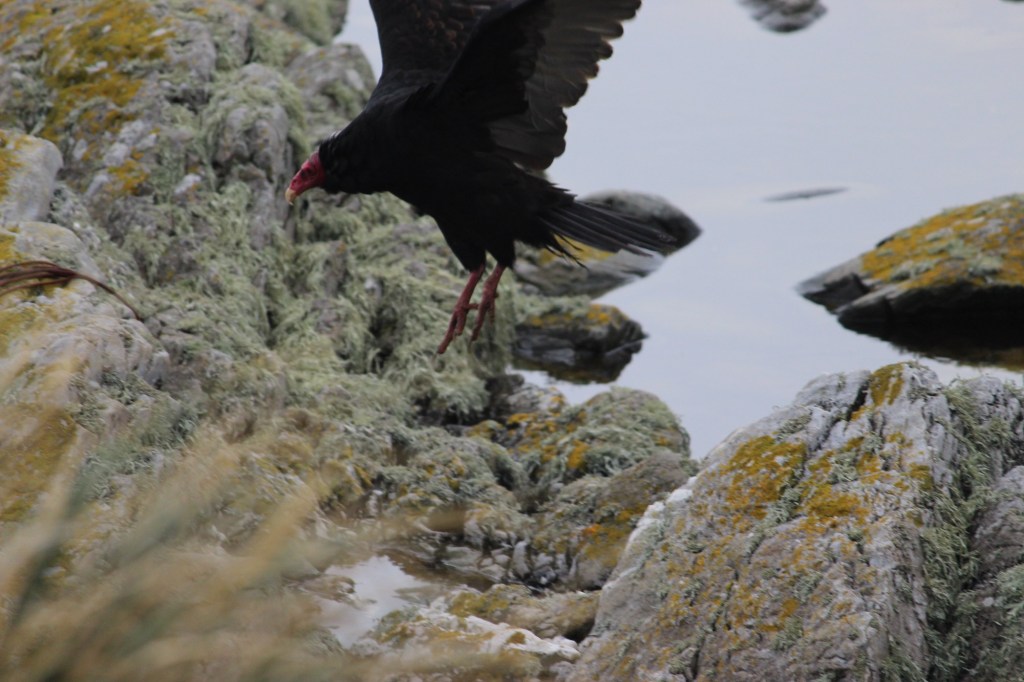
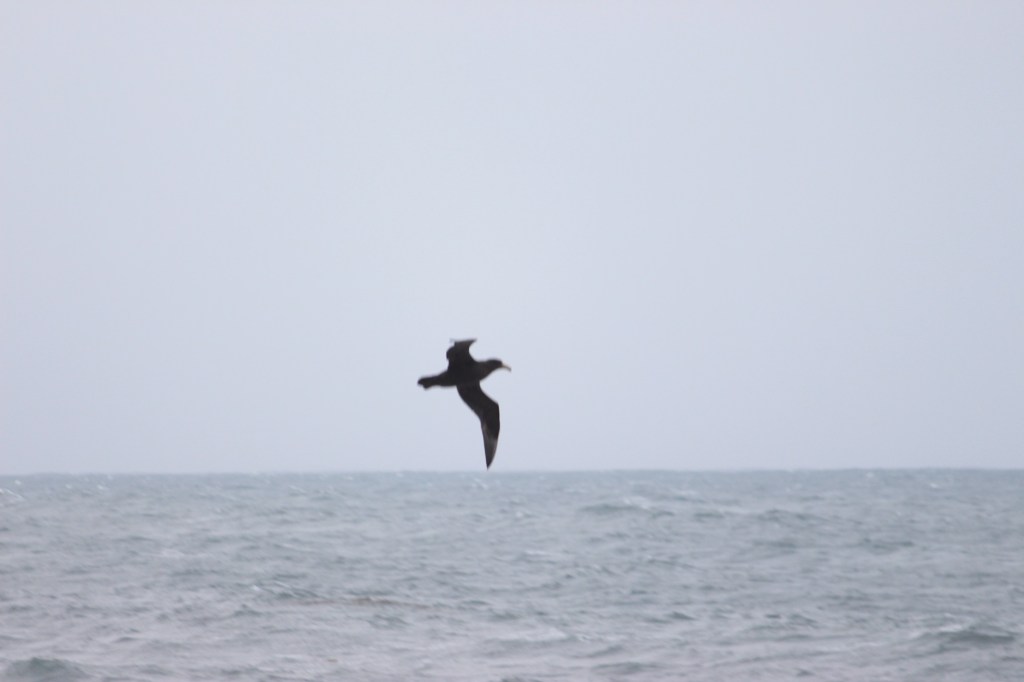
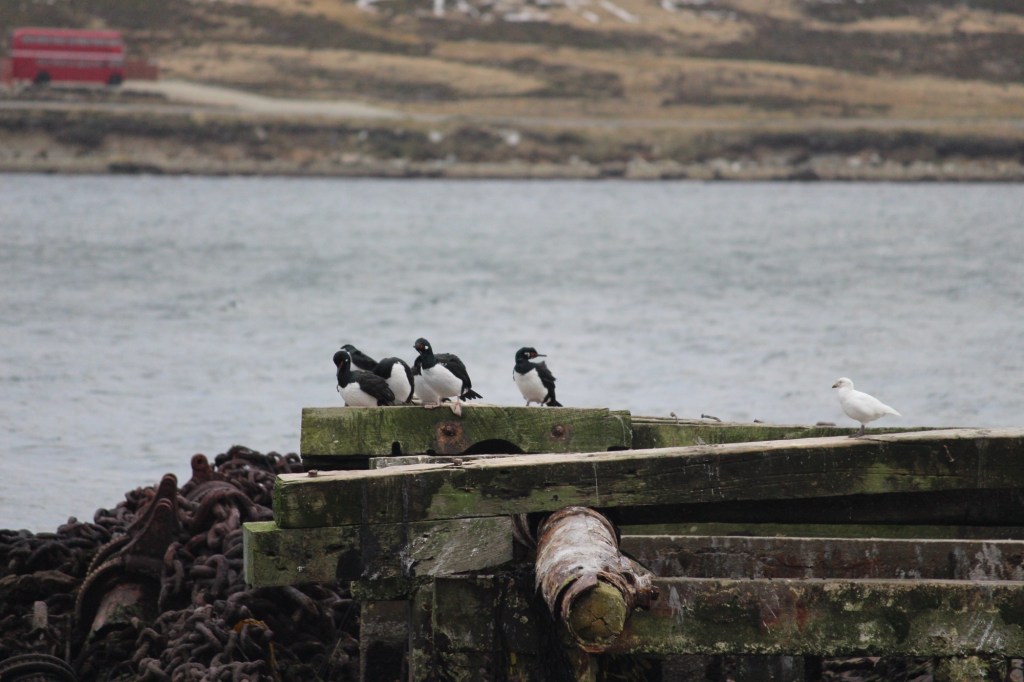
Arriving to the Falklands was like being dropped off in the middle of Salisbury Plain. This sparsely populated land has a military base, and a farming population which means there is around 370 sheep per islander. Without trees, but rich in peat, bryophytes and birds, it felt remarkably Scottish in nature. There was lots of Turkey Vultures, Egrets, Rock Shags, Kelp Gulls and birdlife.
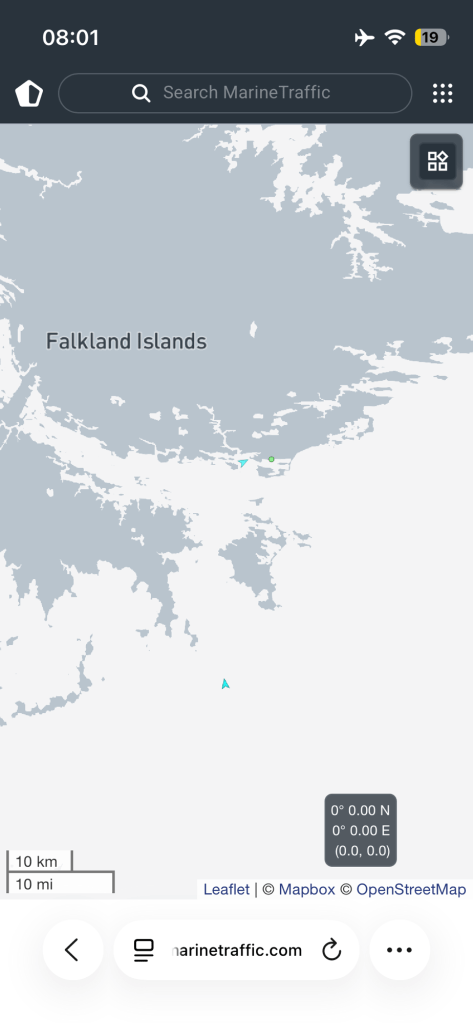
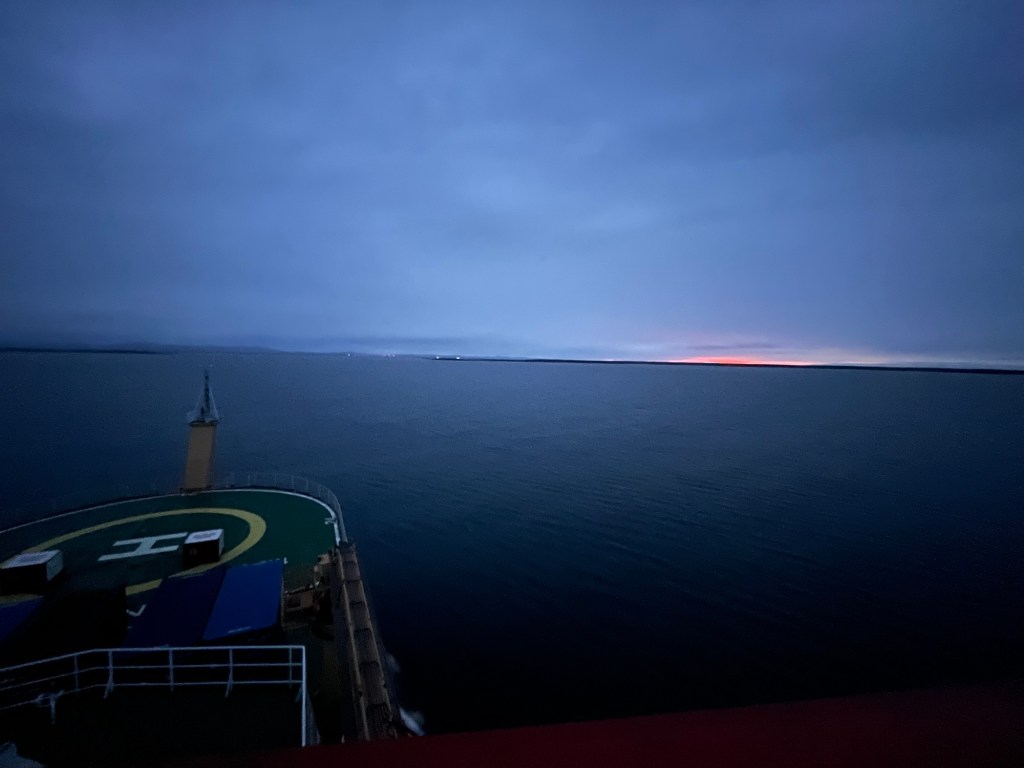
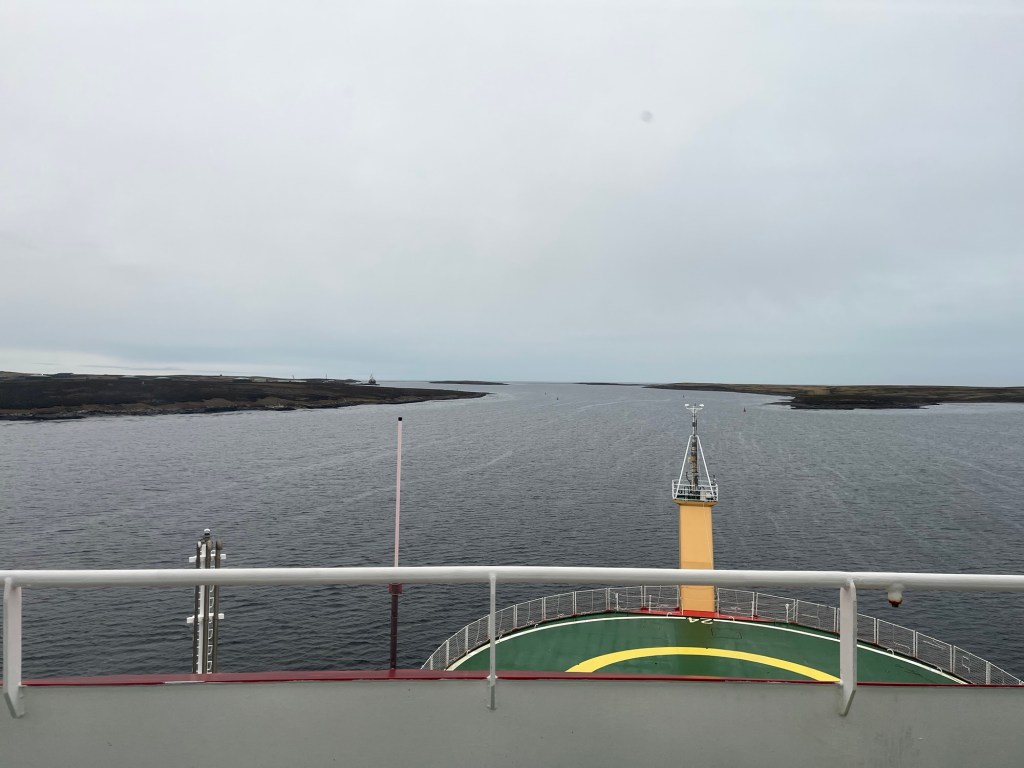
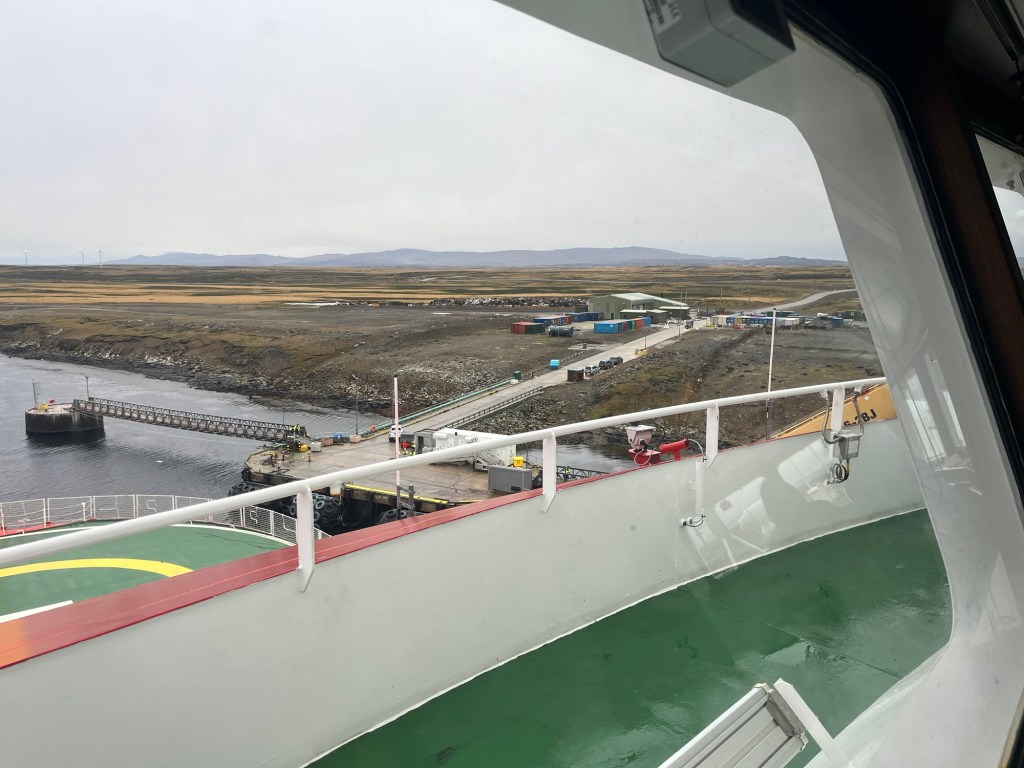
We cleared customs on the boat and were taken by bus to Stanley, waving goodbye our seaworthy home ready to rejoin civilisation.
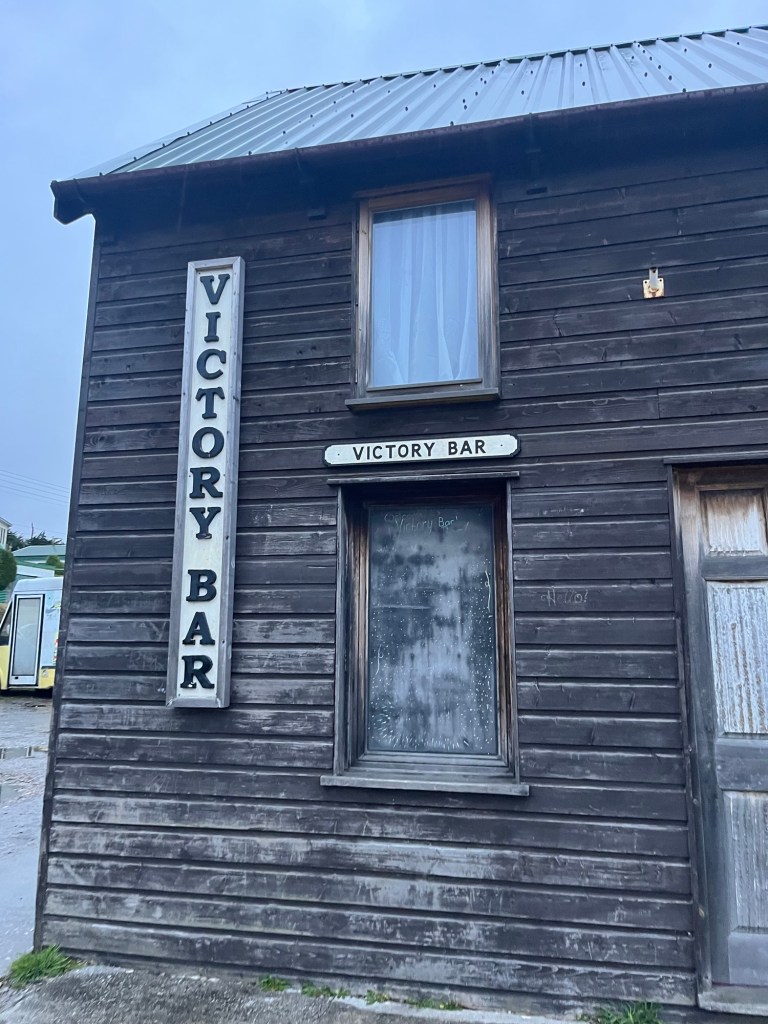
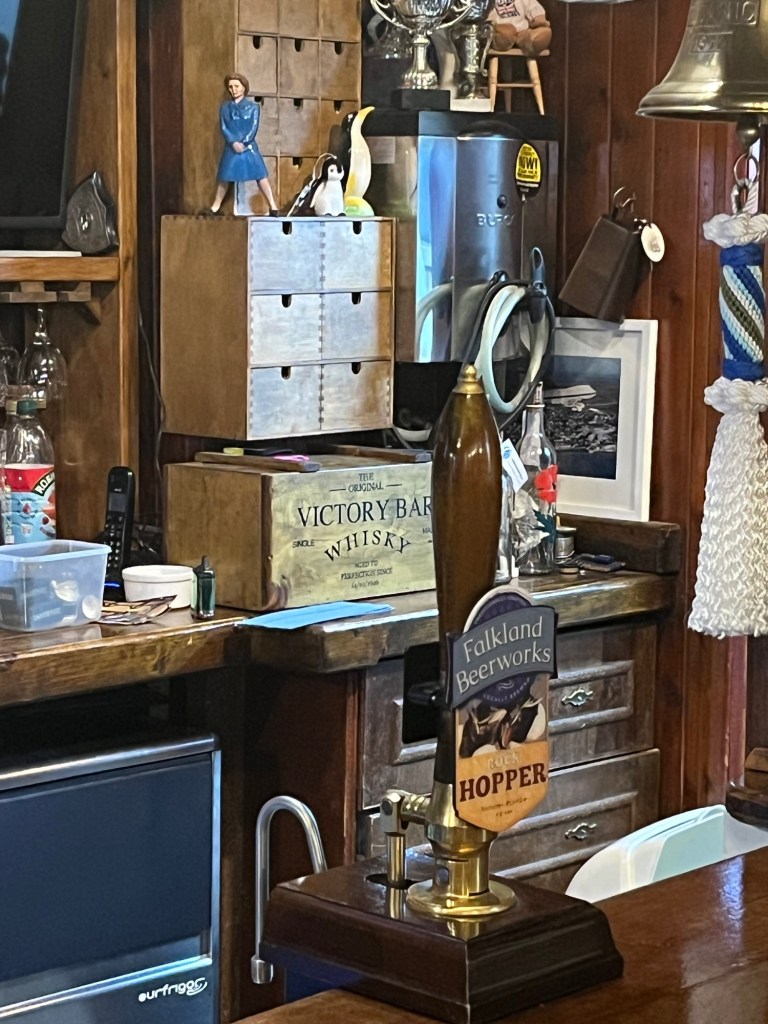
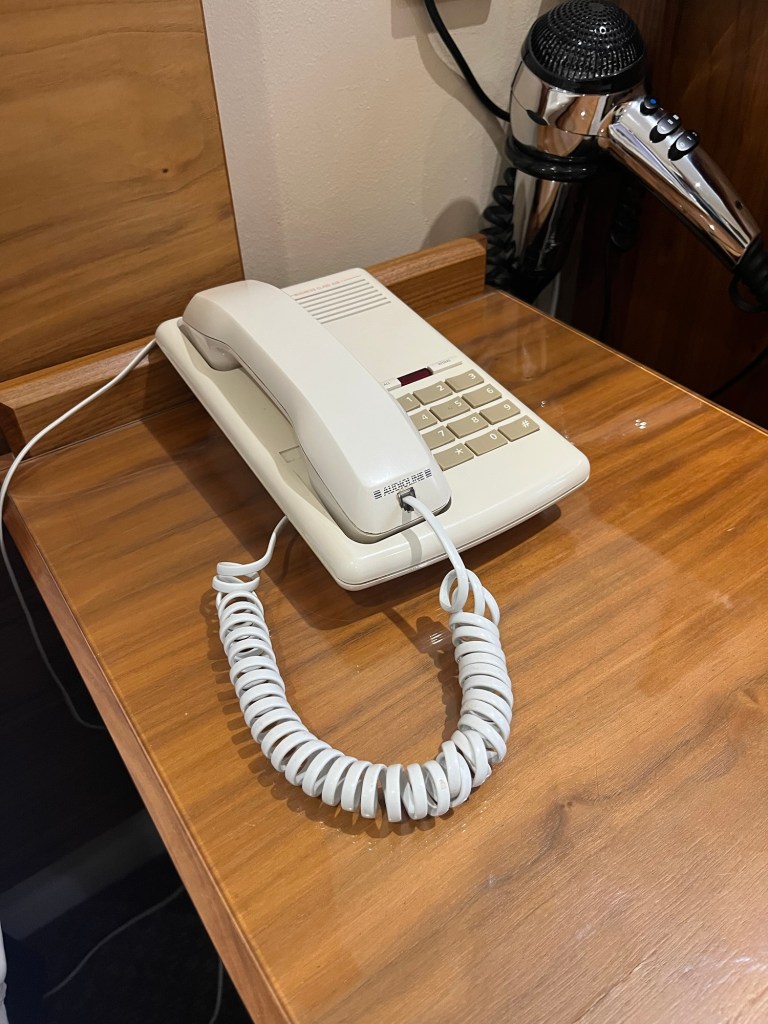
That being said, things were not going to be civilised. After restricted a season of alcohol, most people’s first priority was the pub! The bar, the Victory, was small and reminiscent of a tumbledown pub, but from the outside resembled more of a wooden shack. A figurine of Maggie Thatcher stood behind the bar. There was a cat, who probably didn’t realise how happy many people were to see it, and showed no interest in being petted. The handsets were dated, everything having the slight feel of being lost in time, and local.
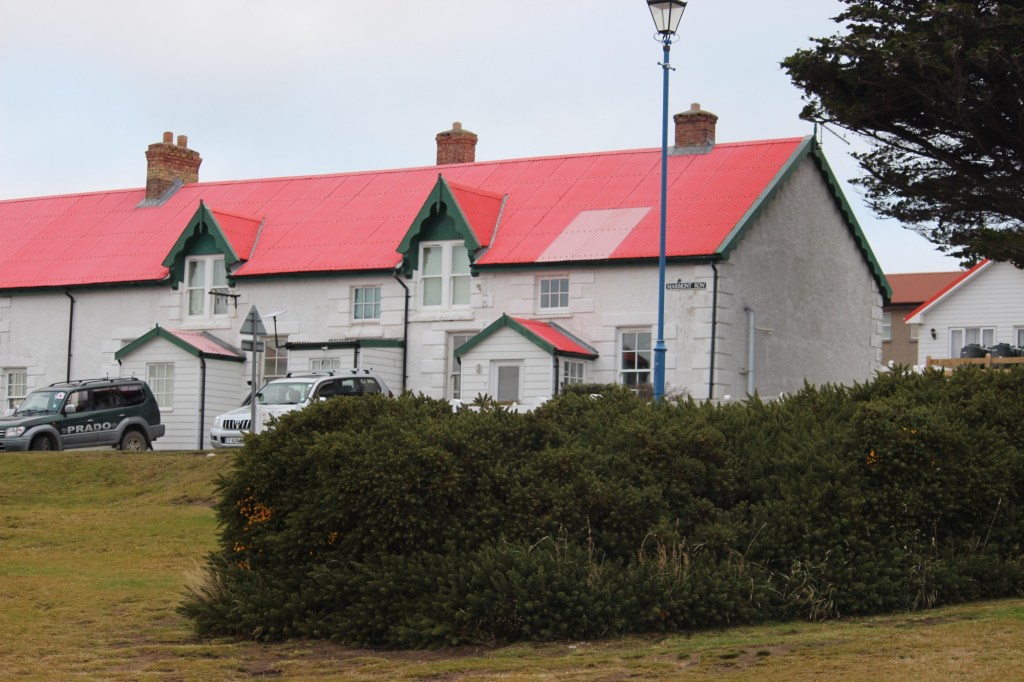
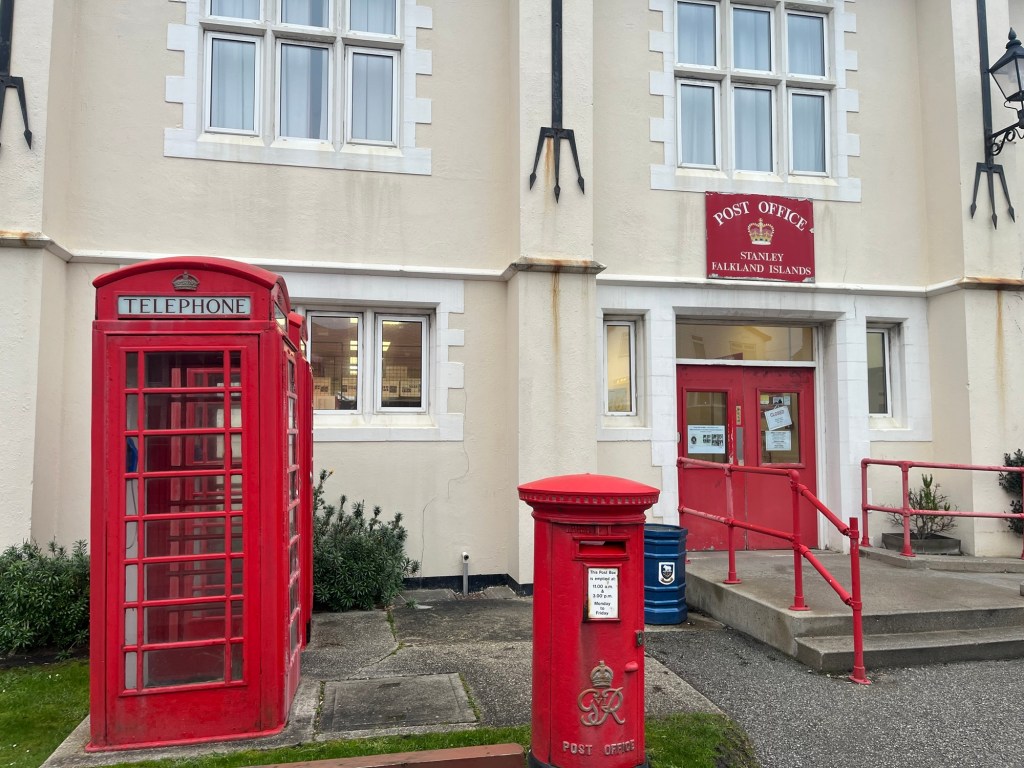
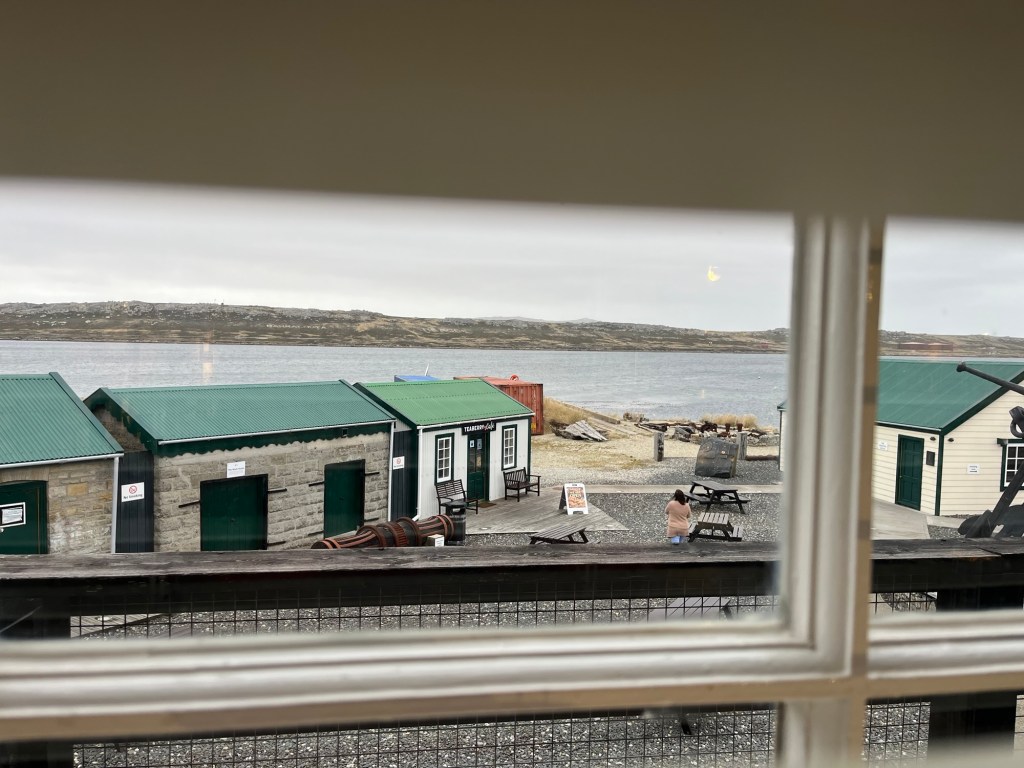
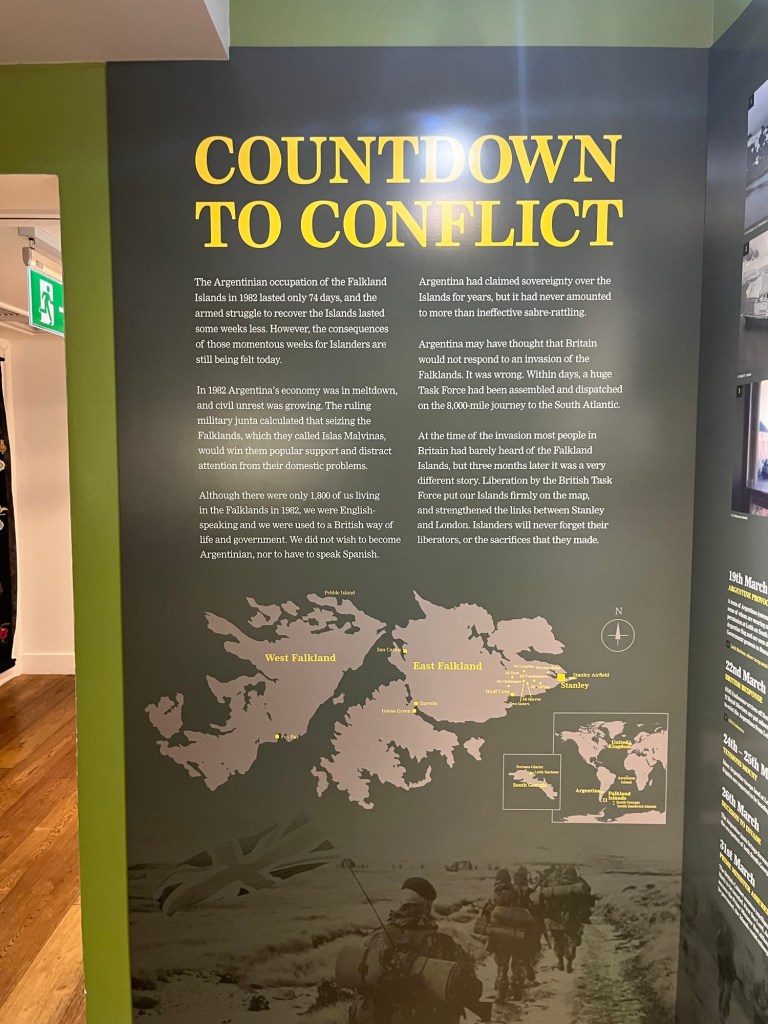
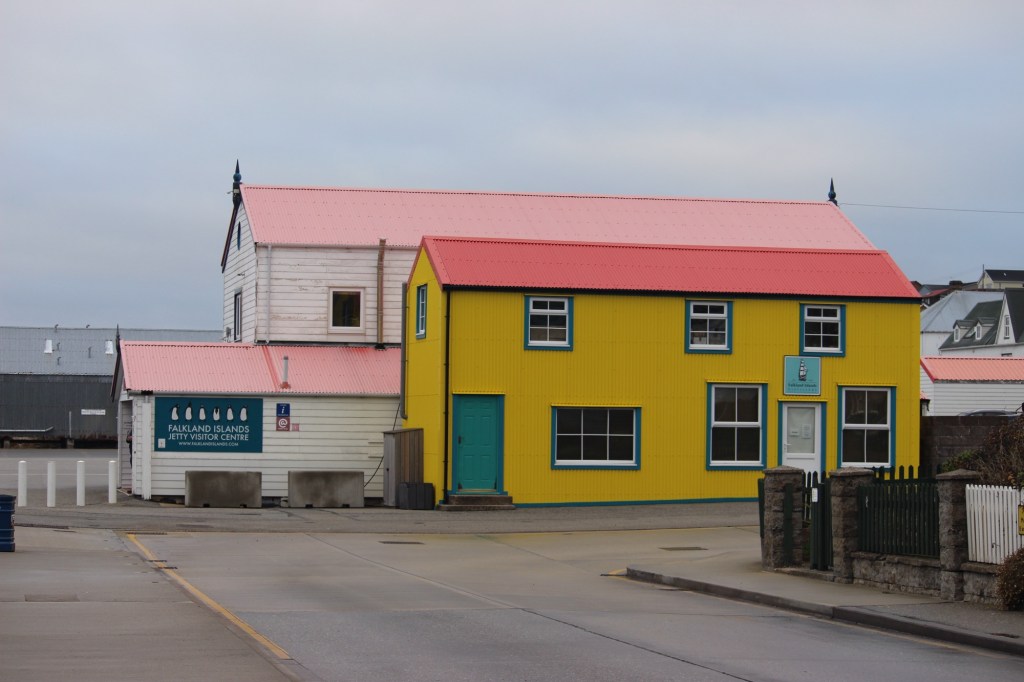
The next morning Katie and I made for the Post office. Everything is proudly British, the tv and radio often broadcasted on delay from the UK. We strolled to a few souvenir shops where the pickings were penguins and wool. The identities of the island. The little museum talked of the settlement history, the varied wildlife, and of course, the war. We realised that we were there during the anniversary of the middle of the goings on – in particular, the battle of Goose Green 44 years earlier.
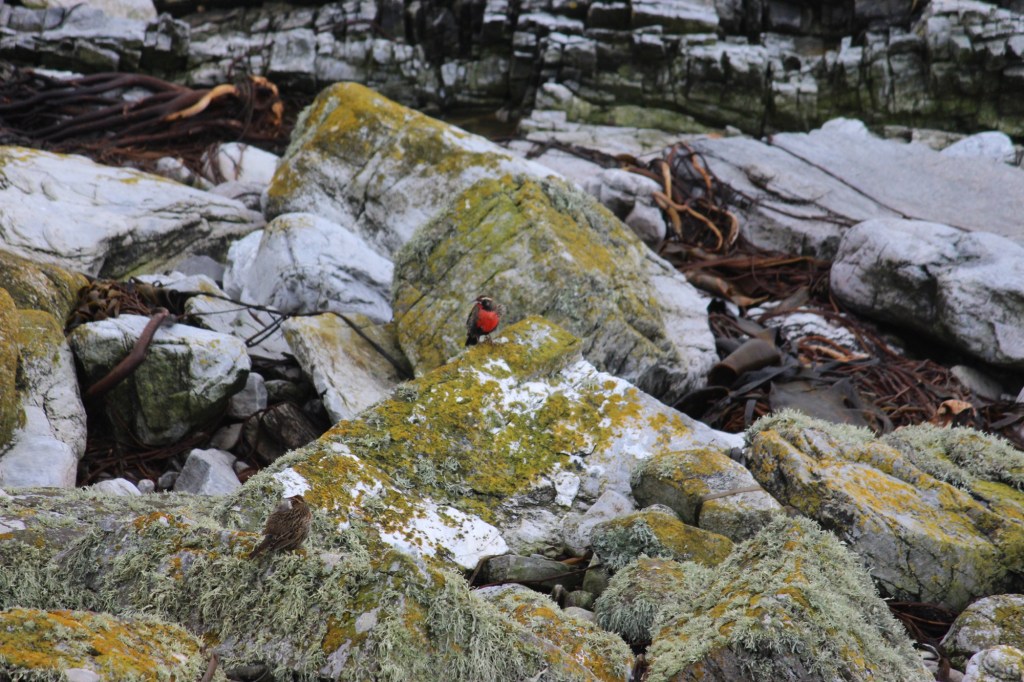
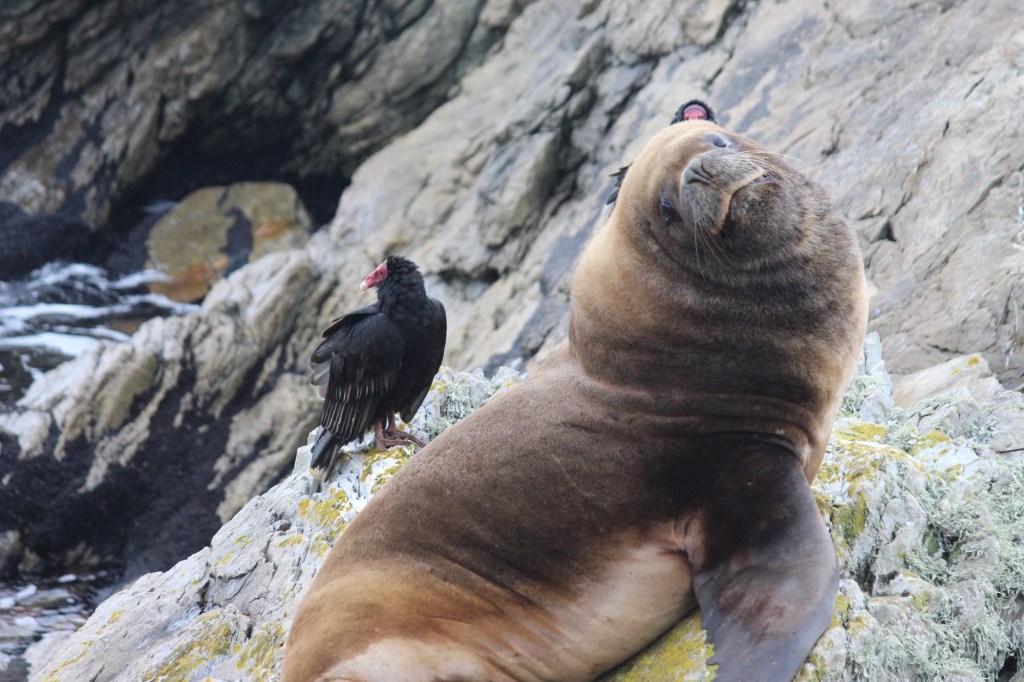
After food, we drove out of town to Cape Pembroke. On this windswept headland stood the lighthouse. Overhead turkey vultures circled, joining the abundant bird menagerie of long tailed meadowlarks, kelp gulls and upland geese. A sea lion sat on the rocks, its huge head dominantly slung back, eying us up.
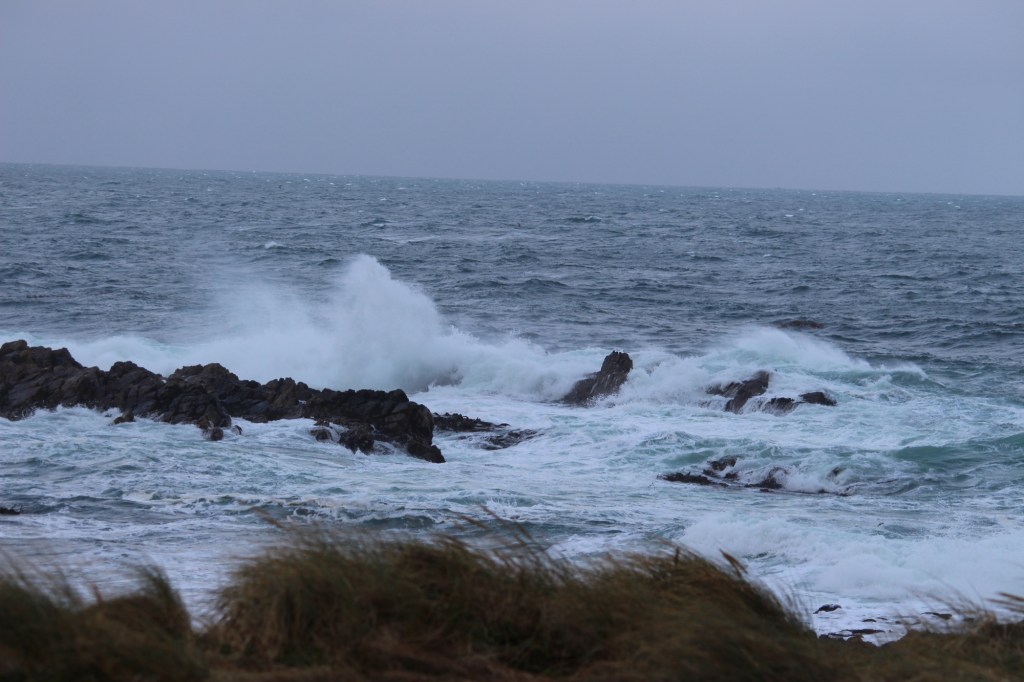
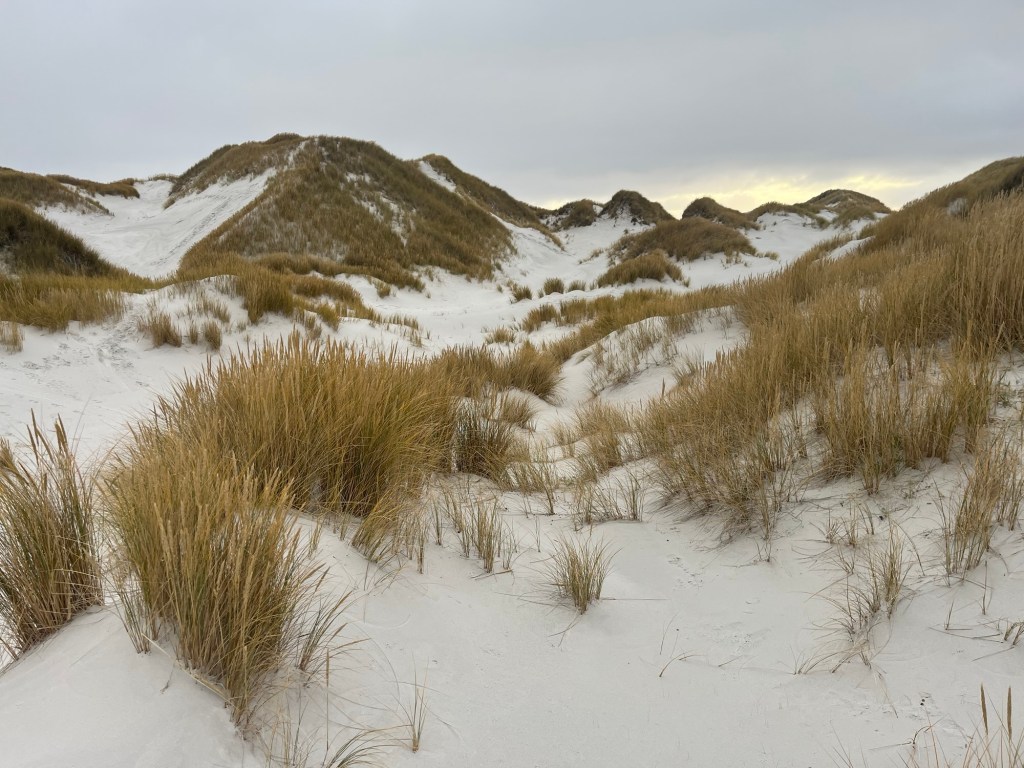
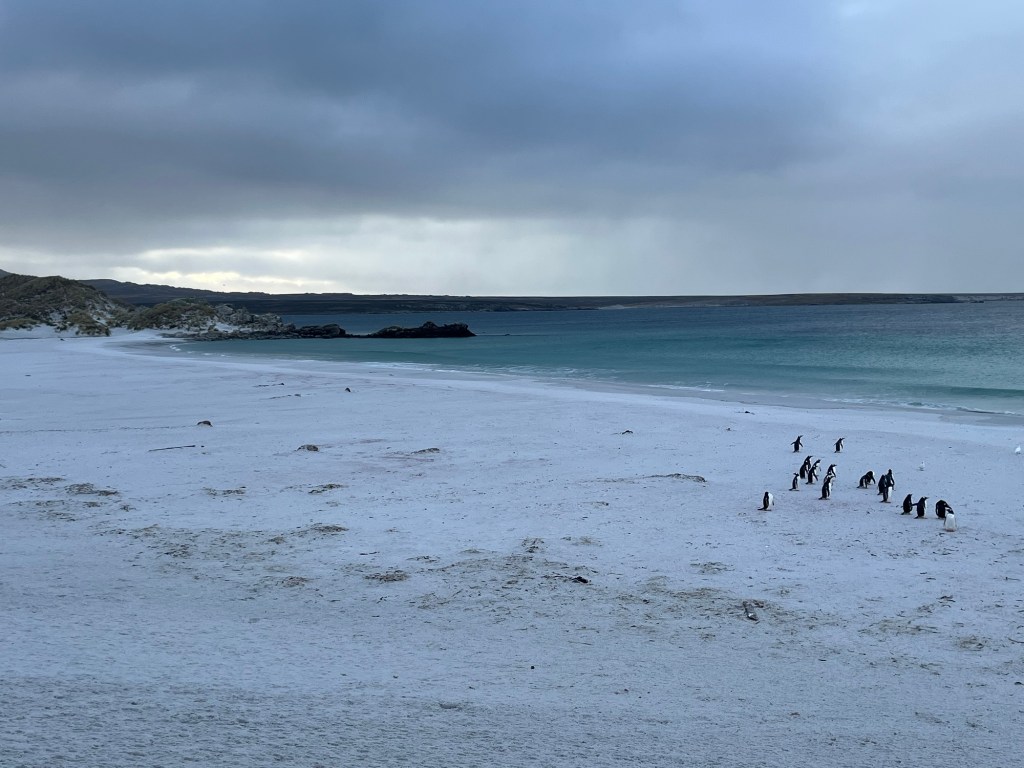
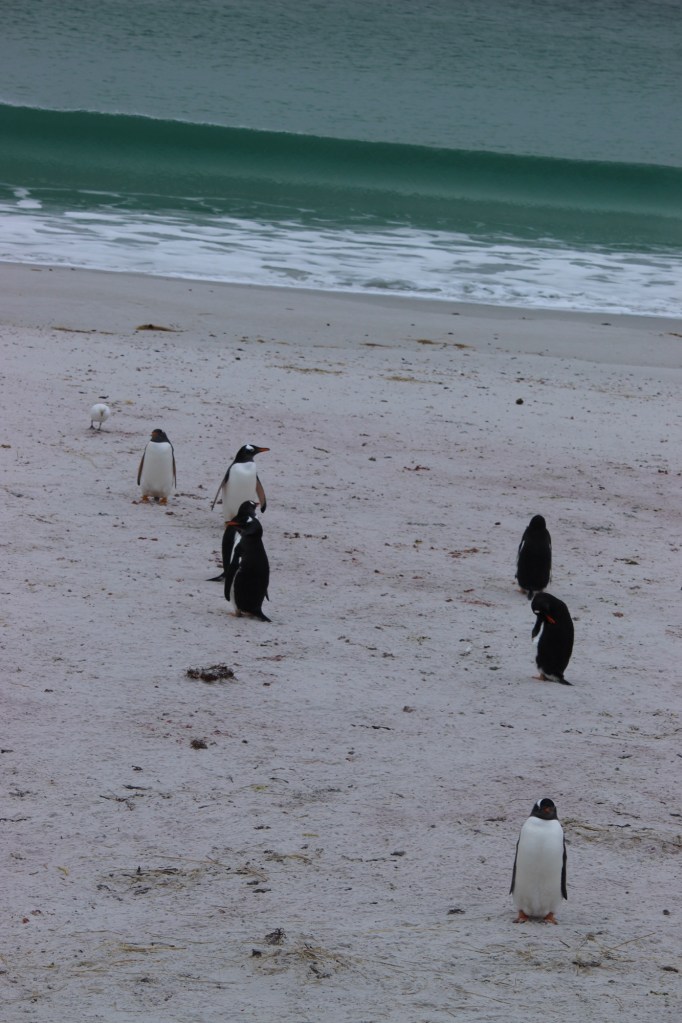
One thing they say about the Falklands is how quickly the weather changes. We ran back to the car as a heavy drizzle drenched us, only to drive around the corner to Yorke Bay and be dried off by a chilly wind. At Yorke Bay, a colony of Gentoos patrol the sand dunes. The white sand beaches and clear blue sea is enough to convince you that you’re somewhere tropical, if you could feel your feet. Although we had just arrived from Antarctica, the humidity in the air gave a different sort of chill. The gentoos waddled around, rushing down the dunes to welcome their friends out of the sea in an excited performance. It was funny to see them not on snow.
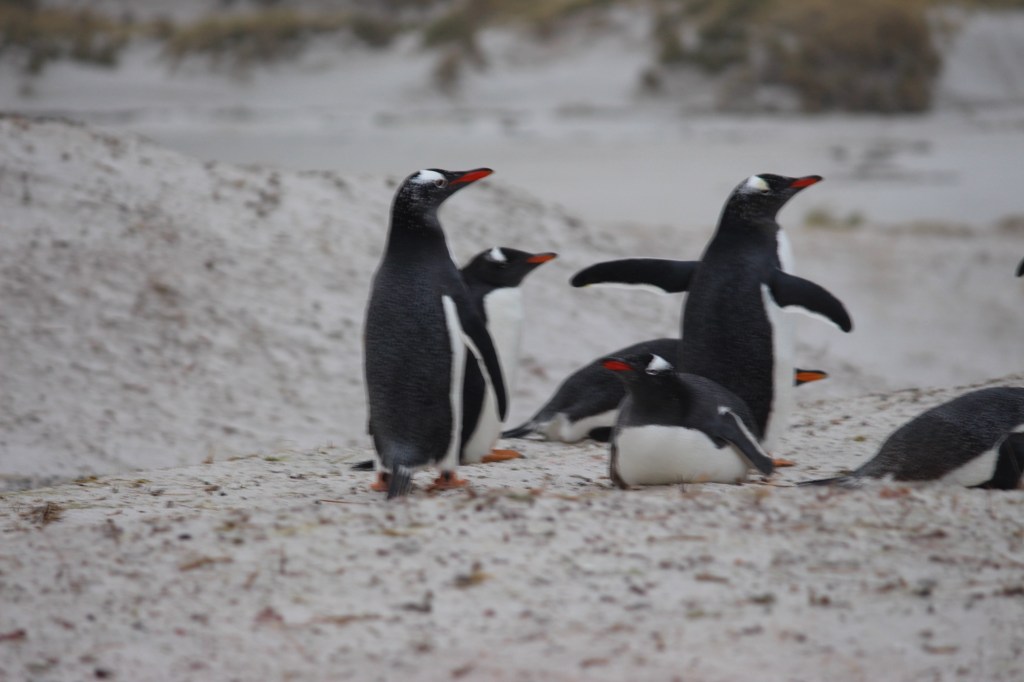
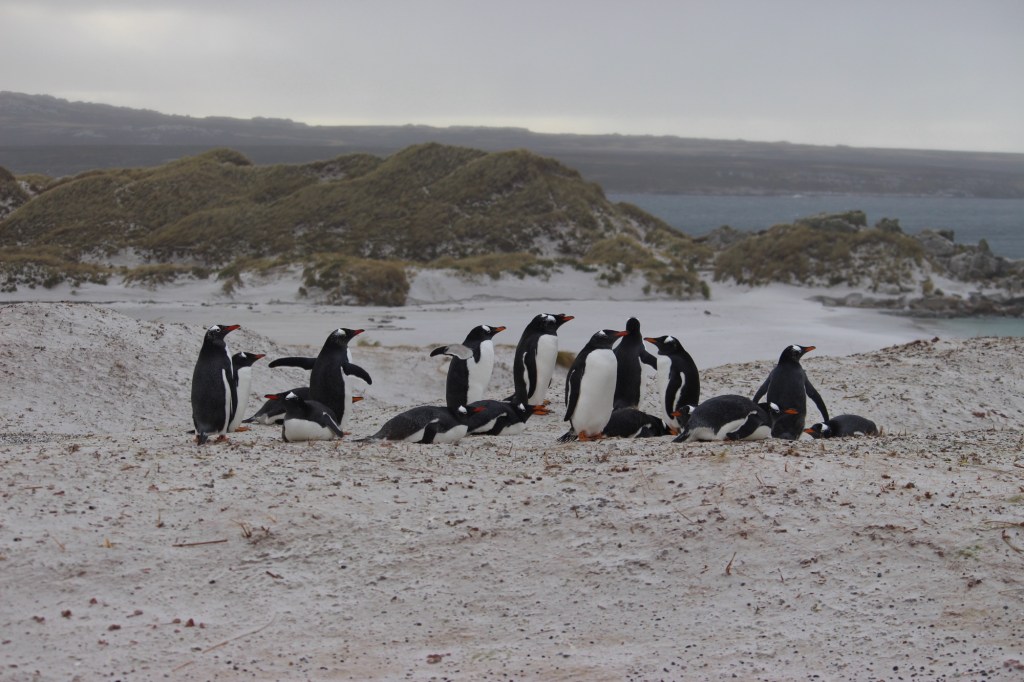
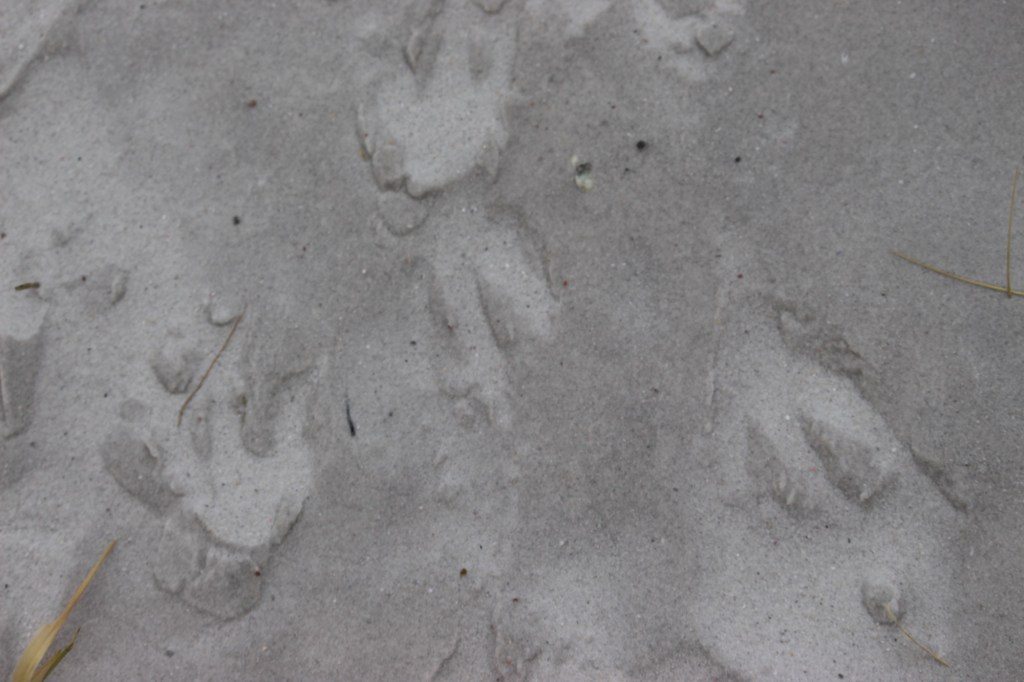
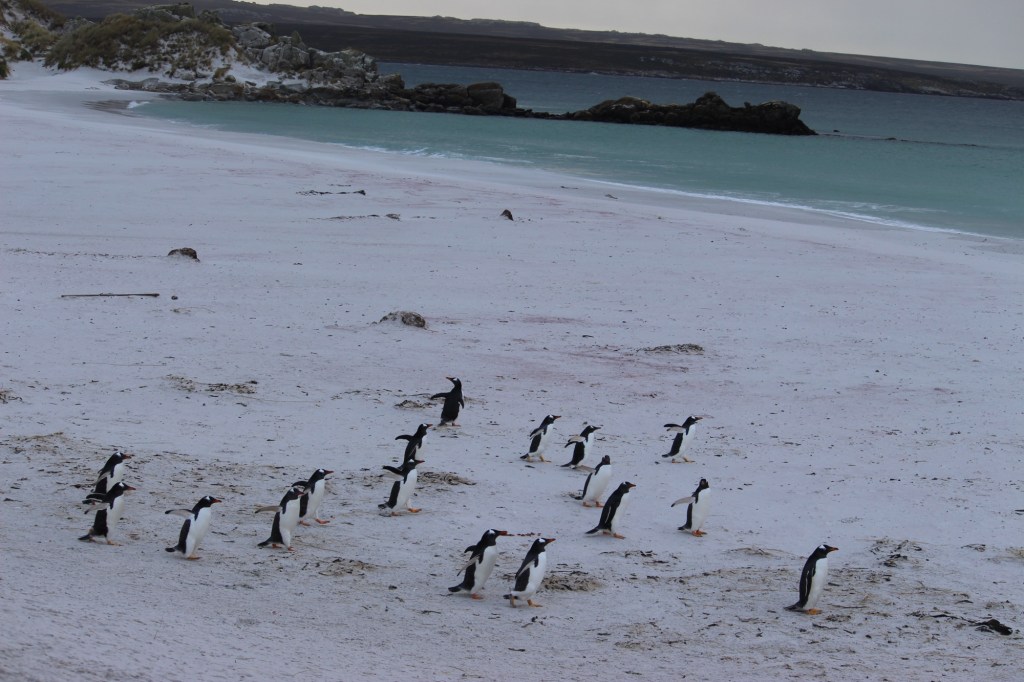
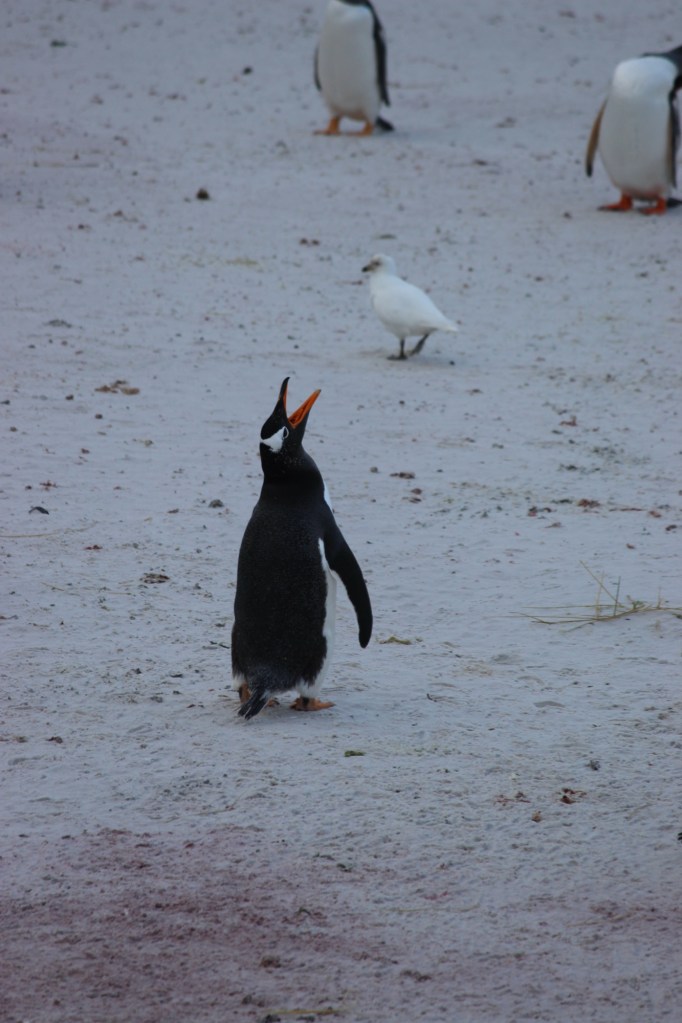
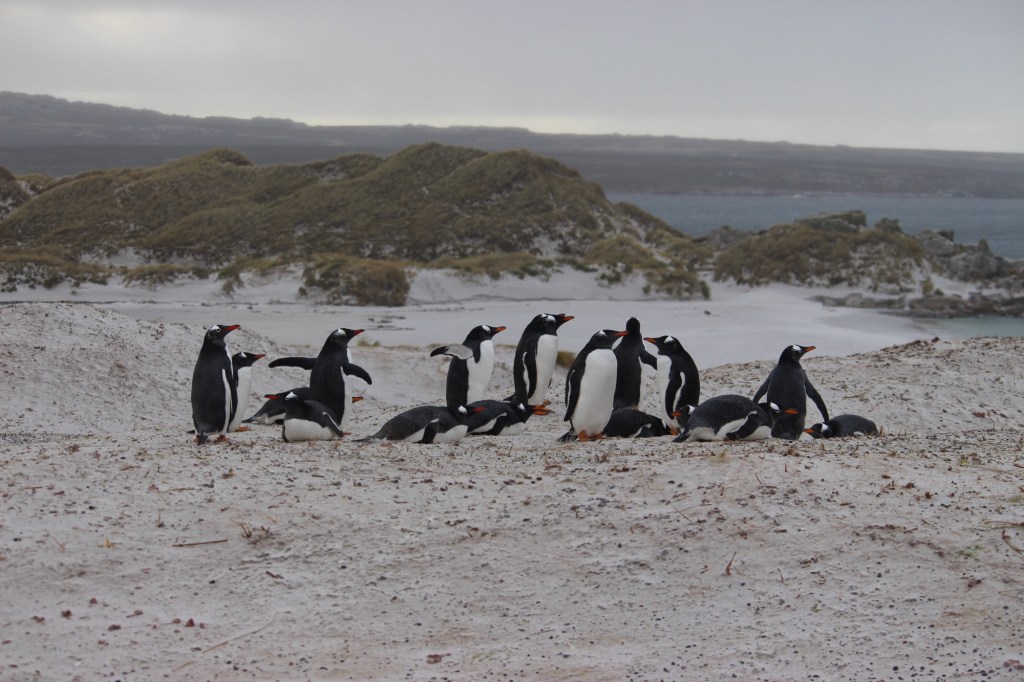
Falkland Islands has the highest penguin biodiversity in the world, home to 5 species : King, Megallanic, Rockhopper, Macaroni and Gentoo. Just around the corner at Gypsy cove, a network of burrows signalled the colony of Megallanic Penguins.
Matt and I checked into our airbnb as we were now officially free from the care of BAS as we ‘made our own way home.’ The Falkland Islands are expensive, and with little option to leave the island, so we embraced holiday mode with a waterfront cottage. The owner had left us a bottle of wine – a perk of the real world. Having to buy and cook your own dinner was less of a real world perk, so we opted for chips and dip! The day ended, in what seemed to be a Stanley Staple, at the Victory Inn.
The next day I had selected a few more penguin stops, first up Bluff Cove. We diverted from the road onto farmland and were soon greeted by a maraud of friendly sheep and goats. The farmer shouted out of his front door, “hello? What are you doing teasing my sheep?” It turns out the address had led us to a farm, where in summer tours would be operating out to a penguin colony. In winter, we had just trespassed a farm. Our punishment was to be invited in for a cup of tea and a morning full of stories. Kevin the farmer was English and had ended up in the Falklands in 76. He then answered a job advert with BAS to be the postman and had spent a few years working out of several research stations. He had many stories of life on Antarctic bound ships, research stations and a pre health and safety life, before then returning to Falklands and buy a farm, just in time for the war. The war offered from a locals perspective, whilst realising how sparsely populated the island is, gave a whole new perspective of how the experience would have been. His farming now involved sheep and goat, a beef herd who he personally shot and hung on the gallows, and trading resources with other farms – including the raw milk he had offered us for our tea, which was farmed by his neighbour.
On Kevin’s recommendation we drove to Fitzroy to see the graves of the Welsh Guards. If commemorates the 32 Welsh Guards and other servicemen who lost their lives on June 8, 1982, when the RFA Sir Galahad and RFA Sir Tristram were bombed during the Falklands War.
The next spot was Berthas Beach. Despite being a well known spot for Gentoos and Megallanic Penguins, the land was private and gated. As we pulled up, the Commander of the British Forces pulled up behind us and let us through. Turns out he was taking his sons there and as we were BAS staff, was happy to vouch for us. We drove down a track, before stopping in a primitive car park. The CBF waved us on, saying the penguins would be further down. Perhaps he felt that the beach would be crowded with us there – the only other people for kilometres!
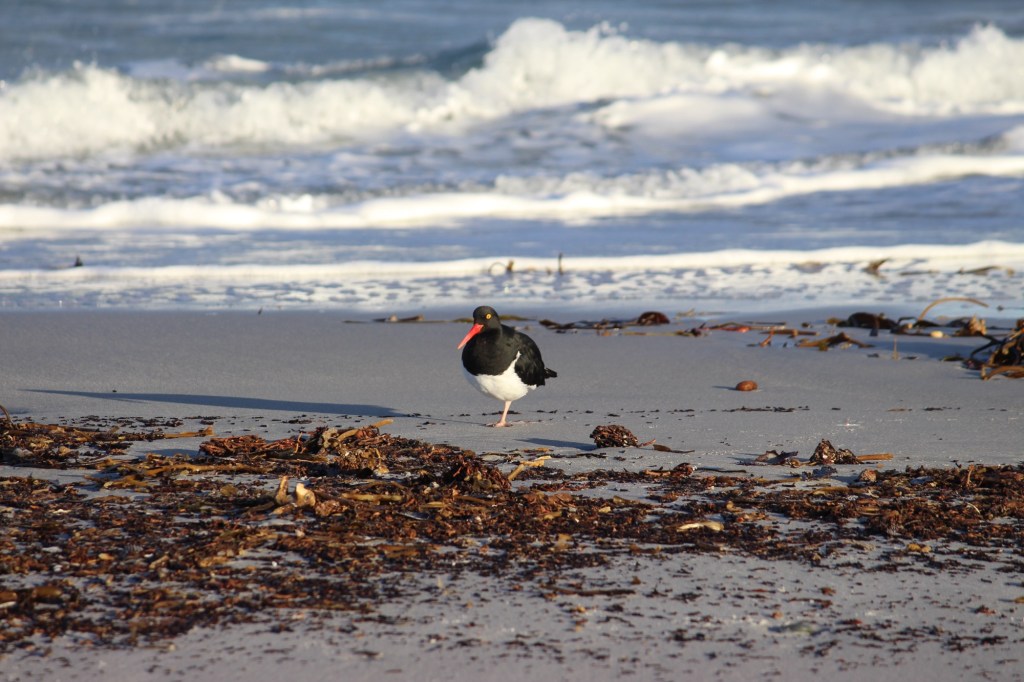
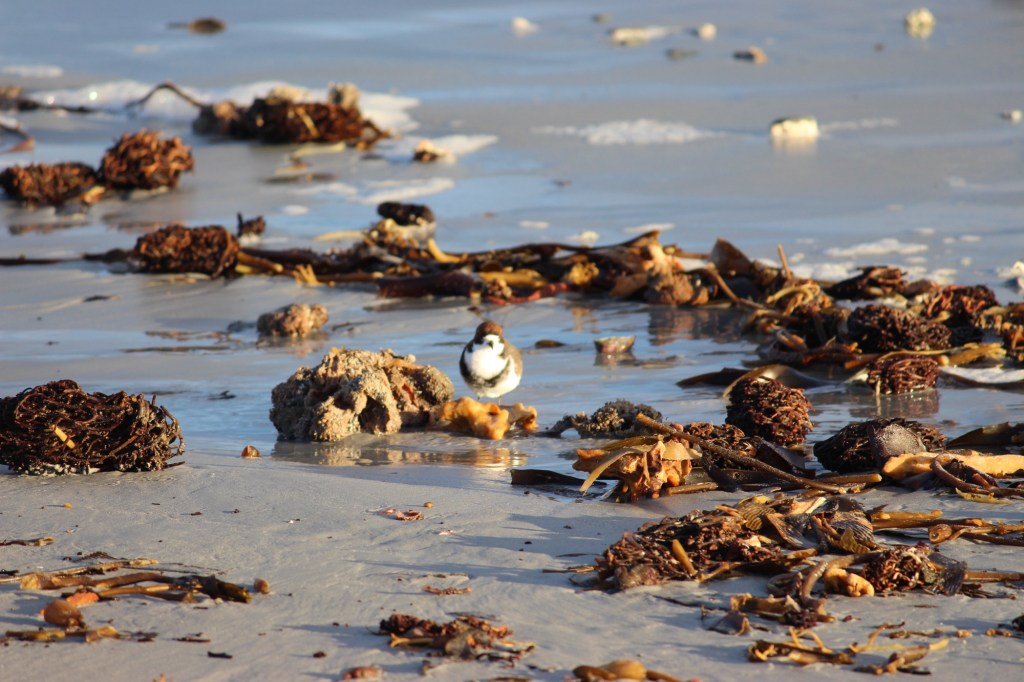
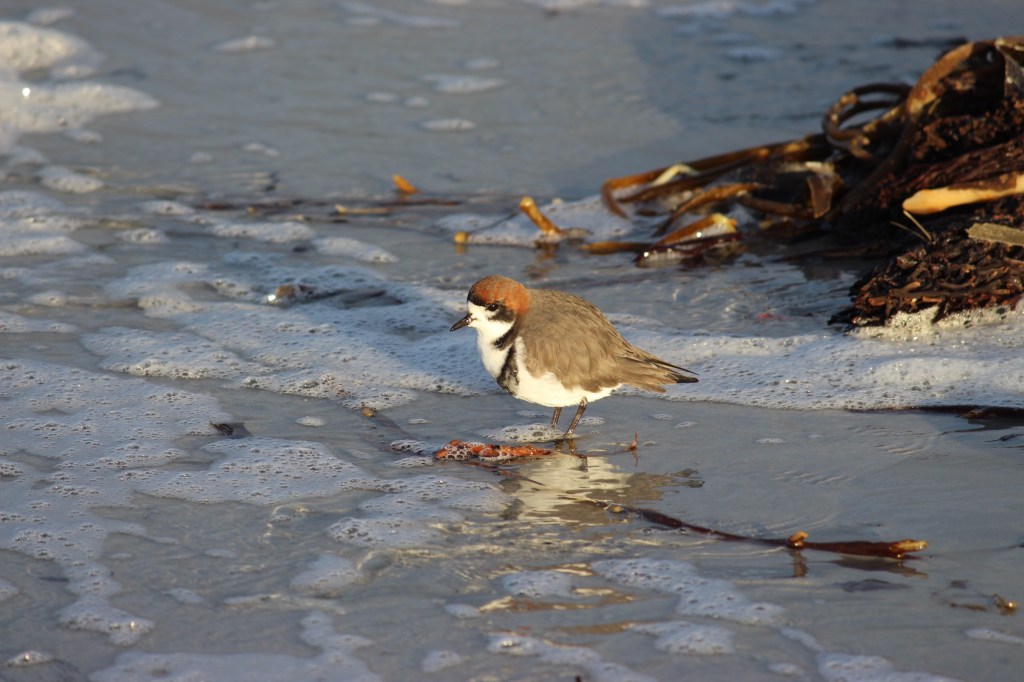
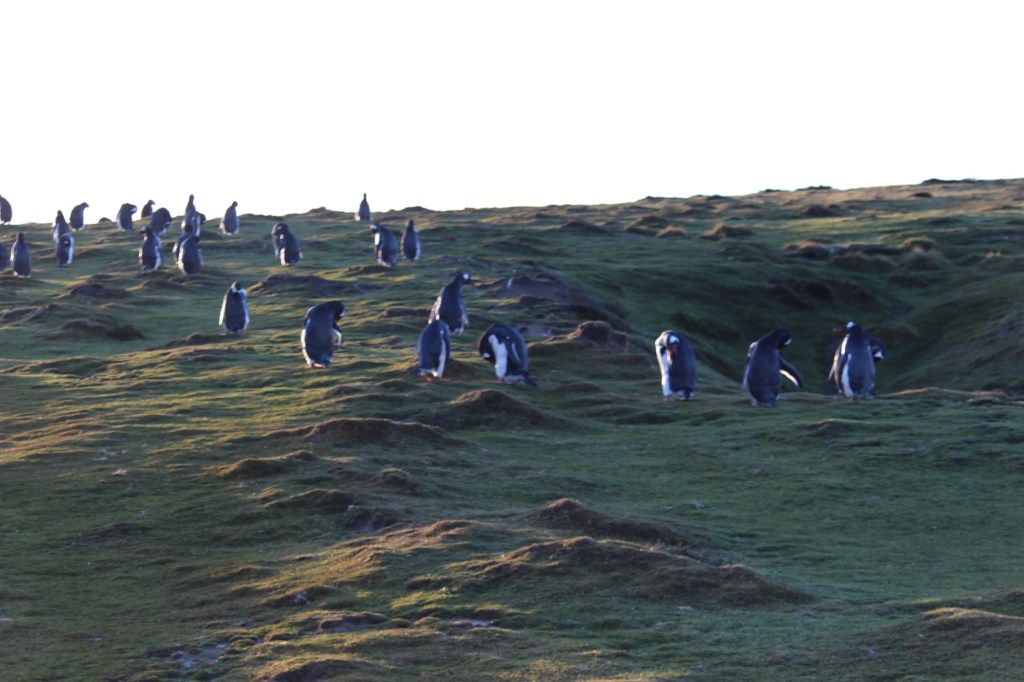
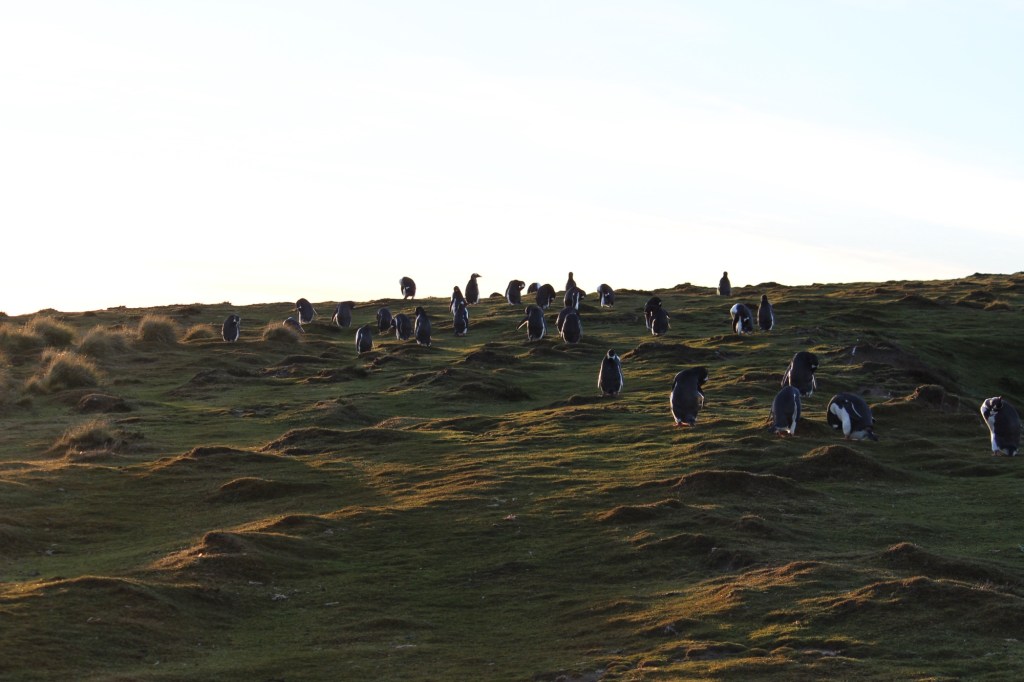
The gentoos were in and out of the sea, splashing about, milling about the dunes. Although the beach looked tropical, the winds were cold. Nonetheless, can’t miss a chance to swim, and definitely not in the southern ocean! James and I ran in, with no time to spare in the chilly wind. It was freezing, but exhilarating. After a few minutes I had lost all feeling in my toes (and just fyi- it took weeks for the feeling to return).
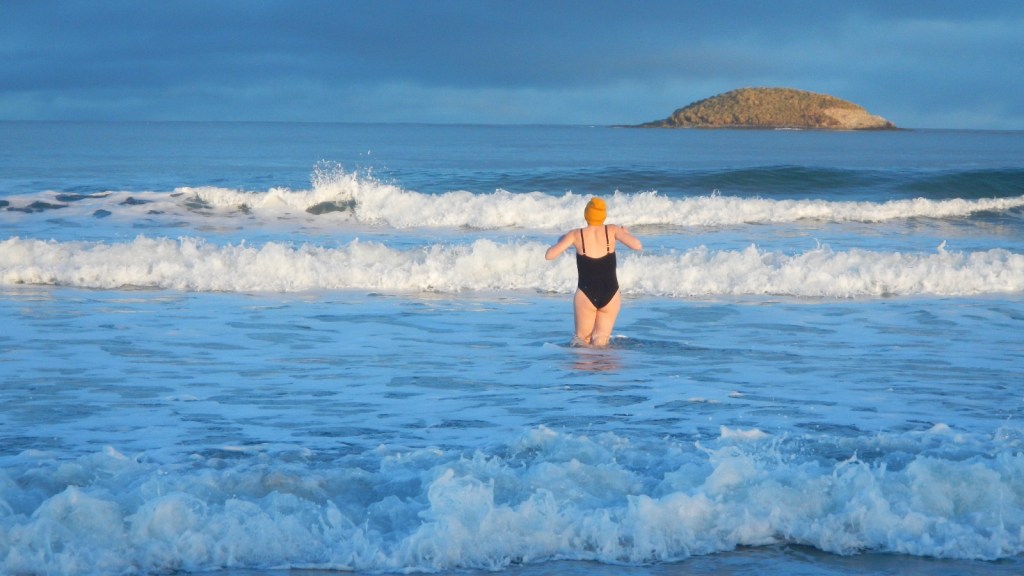
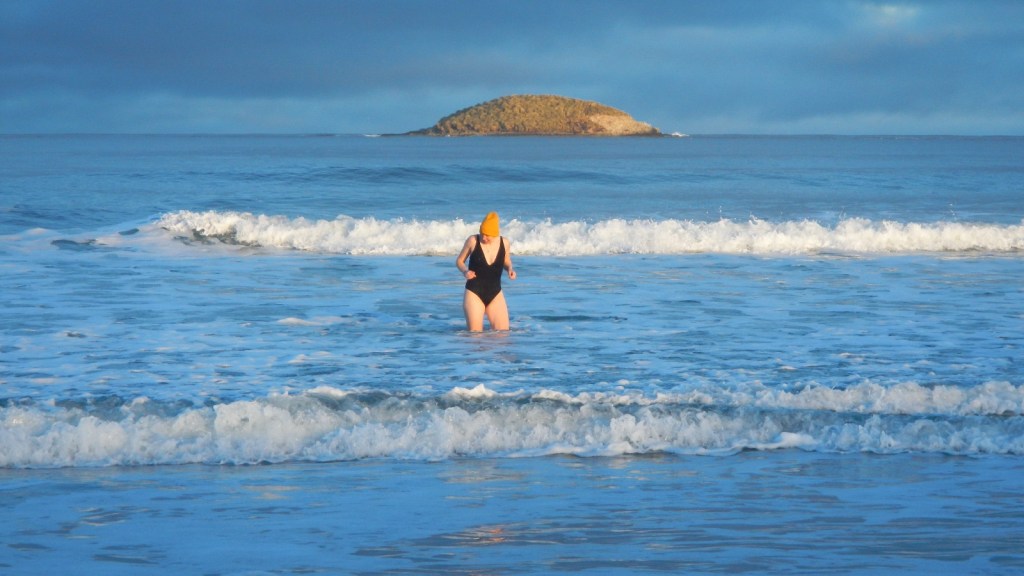
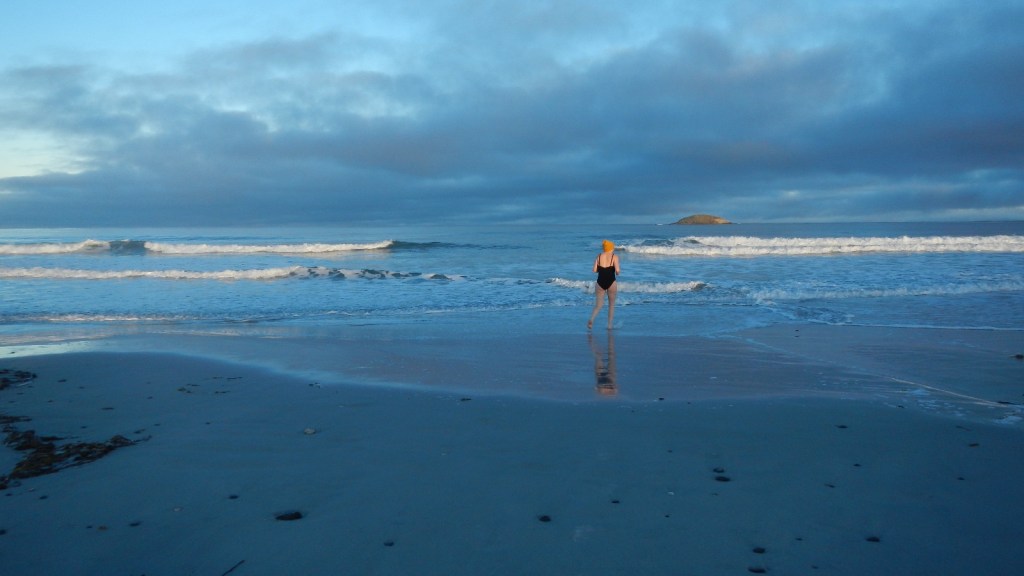
Upon returning to Stanley, a tiny Commersons dolphin was swimming right infront of the house!
In Falklands, all of the cars are 4×4, a lot are landrovers. This is justified by the fact that there is only one Roads beyond the tarmac on the island runs from Stanley to Mt Pleasant RAF base. We weren’t allowed to take the car off road, however due to the lack of roads, it was a blurry line!
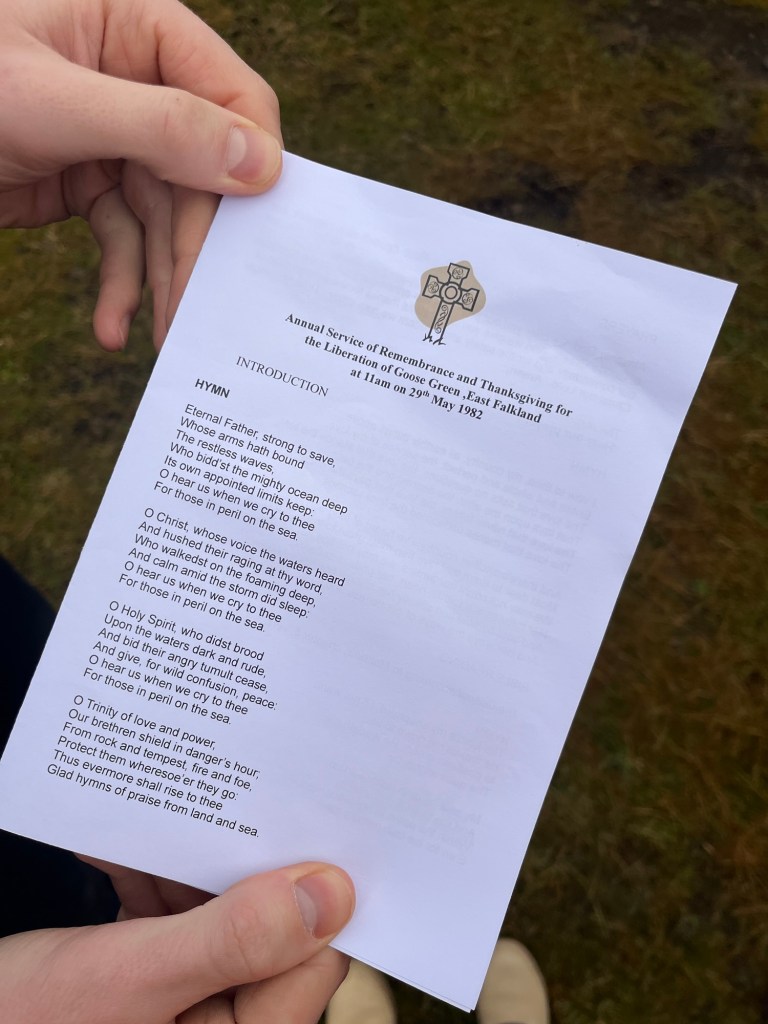
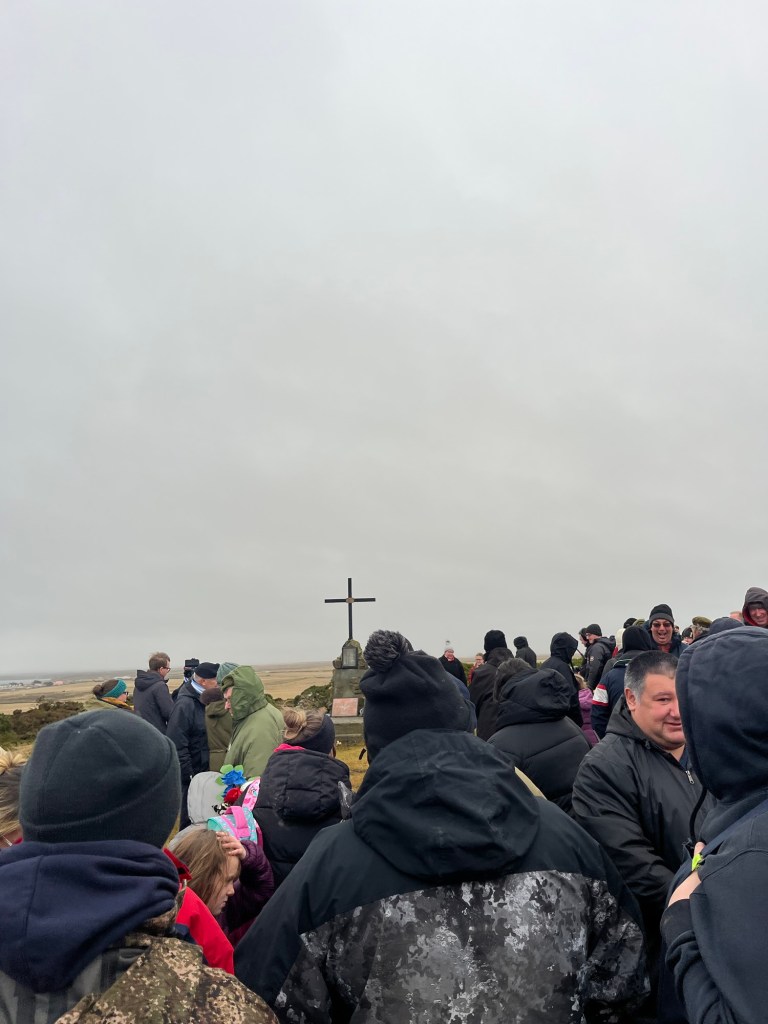
May 29th was the anniversary of the Battle of Goose Green. Goose Green was occupied by Argentine forces during the Falklands War. Over one hundred islanders were imprisoned in the community hall, while over 1,200 Argentine troops occupied the settlement. We headed to the south of the East Island to attend the memorial ceremony. It was similar to a rural Remembrance Day ceremony, only the fallen were local and remembered by loved ones by name. It was on a gorse covered, chilled by a cold wind and we sung from paper handouts battling the elements. Afterwards we headed to the cafe. This settlement is the 3rd largest on the islands with a population of 40, yet it can only be described as sleepy and remote. The uniform buildings are a bit ranch like.
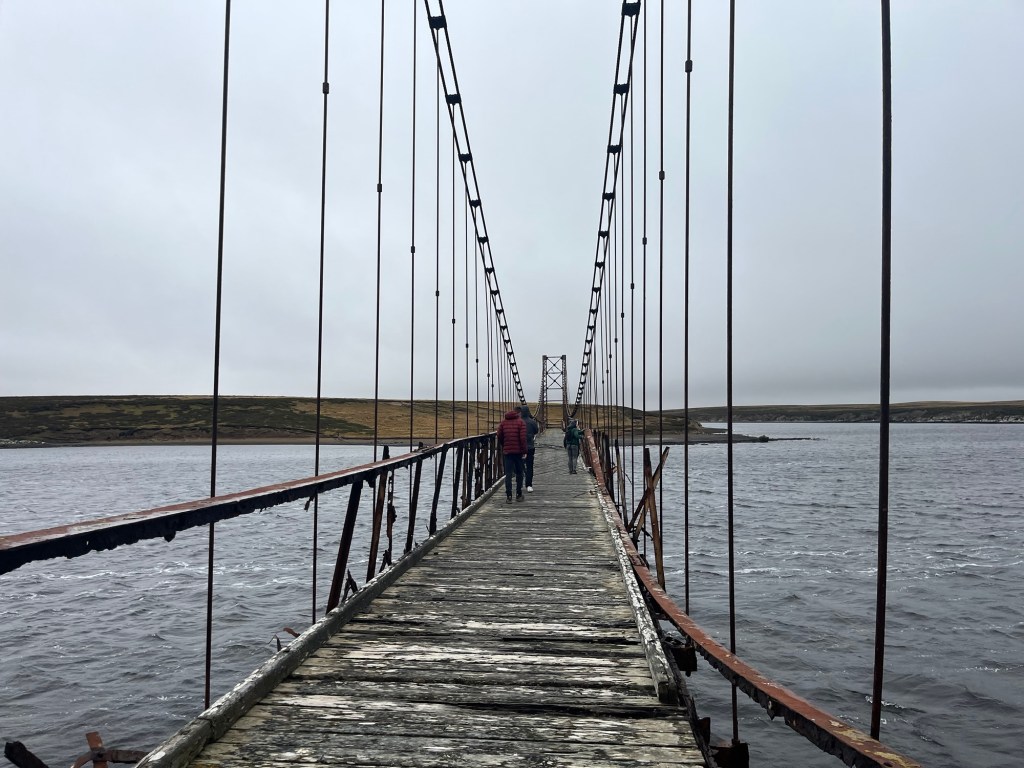
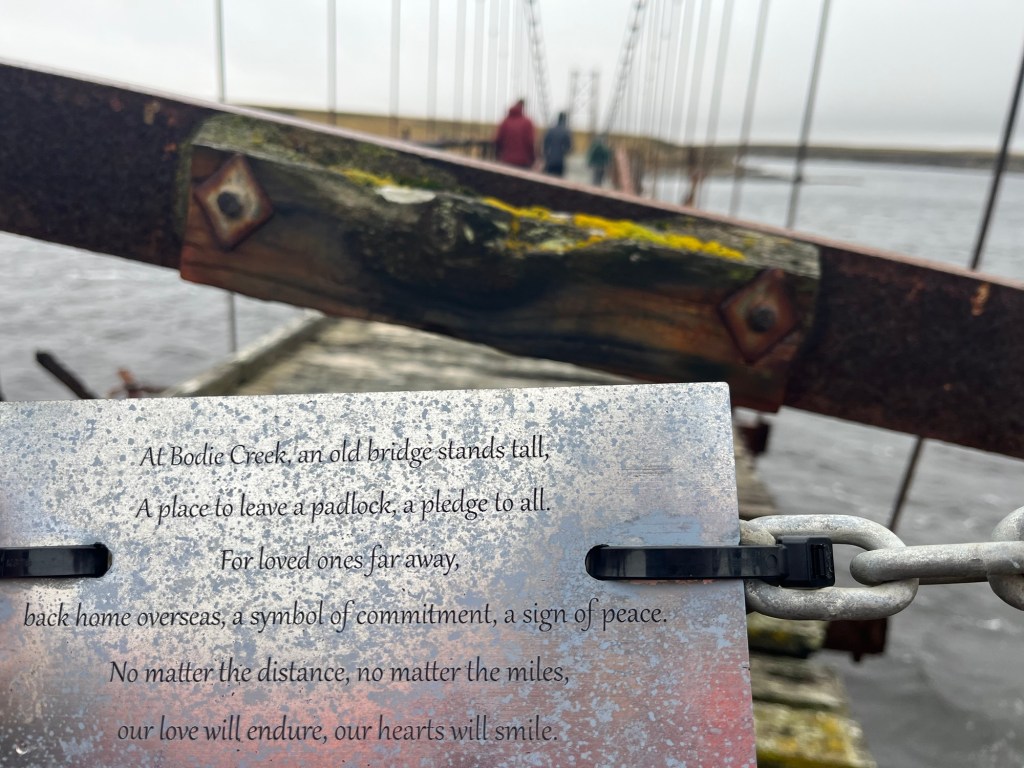
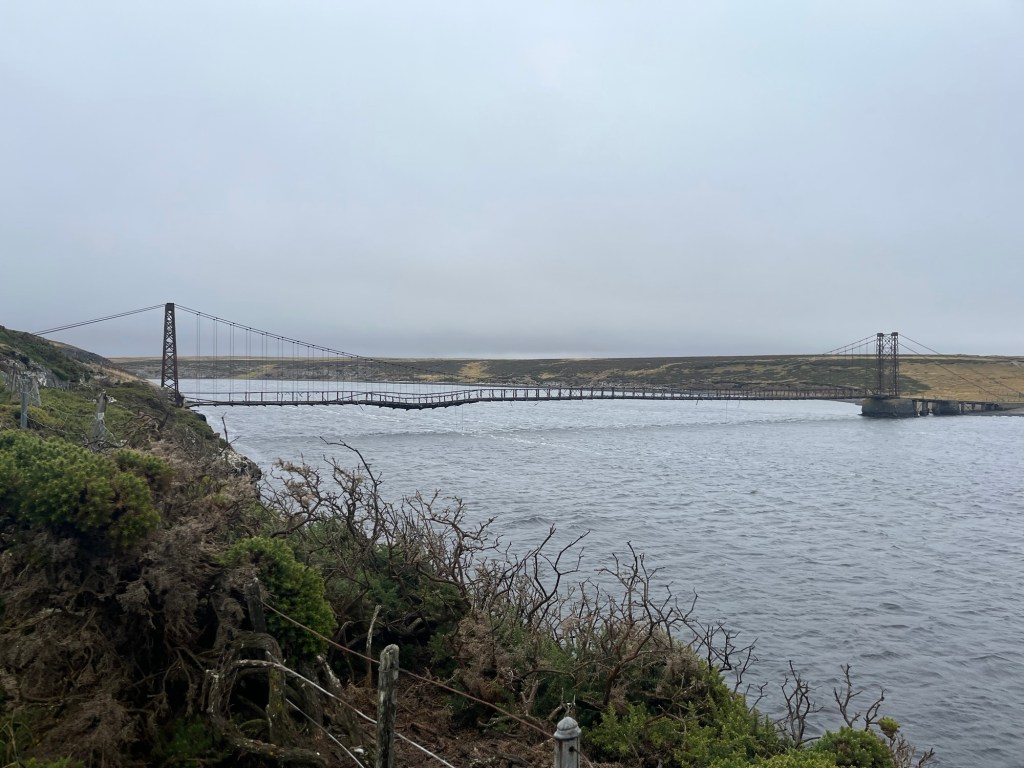
“Just down the road” was Bodie creek suspension bridge. Except 9 minutes on google maps translated to a tenuous track, bumped along in 4wd, followed by a barbed wire fence and a km on foot. The suspension bridge, although permanently closed in 1997, looks much grander than its location would indicate a need for. It was built in 1925, in order to shorten the distance sheep needed to be driven to the shearing sheds in Goose Green. The bridge was rusted through in part, and the wooden slats tipped heavily to one side in the middle. Katie, Matt, Matt and James confirmed it was indeed still passable – but for how much longer?
In the evening we joined the group for a meal at the hotel. The evening featured a stop at Falklands beerworks where the draught beer included Peat cutter, the Iron Lady, and the Rockhopper. At midnight, the bus took those getting the RAF airbridge flight (via Ascencion Island to Brize Norton) to the airport. The remaining group would get the only other flight out the next day, to Punta Arenas.
The airport experience was unlike any other, and really filled the day! We were picked up just before 9am, with the bus that takes the entire flight full of people to the airport. As you all arrive together, the queue snakes into the RAF building and up to a casual check in system. Matt and I, who were travelling onward together, didn’t appear to be on the flight list. Normally this would be concerning – no booking and no more flights out for a week- but as there is only one booking operator organising everything, a phone call and a few WhatsApp’s from the check in desk got our tickets sorted. It was a steep £40 exit tax to leave the island, where we could then sit and wait in the small lounge, to board the plane.
The Falklands were a unique experience. A proudly British settlement at the bottom of the world. So sparsely populated that anything goes, but it has its own rules. It will be remembered for its friendly people, interesting driving conditions, and its rather rude awakening into the real world (£3.30 for a lemon!)
 Lauren Baillie
I get the impression that this incredibly remote and seemingly happy to be out dated outpost of Great Britain is welcoming but cautious. Were there many off limits or private pieces of land. Good job that your BAS credentials opened gates for you. The climate doesn’t sound appealing and if it’s cold enough to numb your feet for so long swimming (even the cold dip type) doesn’t appeal. Yet it is now a place I’m curious about and would love to visit (briefly!!).